
Ken Jacobsen, director of Temple Law’s sports law program, discusses the recent Kawhi Leonard scandal and the heavy punishments being administered by the NBA.
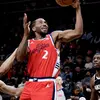
Kawhi Leonard and the Los Angeles Clippers are accused of circumventing the NBA's salary cap rules.
Photo courtesy of EPA/Erik S. Lesser
Clippers fans celebrated in 2019 when superstar Kawhi Leonard signed a contract with his hometown team just one month after leading the Toronto Raptors to their first-ever championship.
But it was a different scene last week as the NBA announced severe punishments for Leonard, the Clippers and its owner, Steve Ballmer, for violating the league’s salary cap circumvention rules.
Following a yearlong investigation, the NBA is accusing Ballmer of arranging sham endorsement deals to supplement Leonard’s contract outside of the league’s salary cap. The team must now forfeit five future first-round draft picks, pay a $30 million fine and Ballmer will serve a yearlong suspension. Leonard was also fined $700,000.
The case has drawn comparisons to the New England Patriots’ 2015 Deflategate scandal or the Houston Astros’ 2020 cheating controversy as one of the most significant league discipline cases in recent memory. The punishment is raising questions about how salary caps work, and why the NBA came down so hard on the Clippers.
Temple Now caught up with Ken Jacobsen, professor at the Beasley School of Law, to discuss the scandal, the Clippers’ punishment and the importance of salary caps. Jacobsen is the director of Beasley’s sports law program, has decades of experience in the sport and entertainment industries, and has developed legislation that protects Philadelphia student-athletes in NIL negotiations.
Temple Now: What exactly is the NBA accusing the Clippers of doing?
Ken Jacobsen: Professional sports leagues like the NBA have salary caps. That is the upper-level amount that teams can spend on their entire roster. The salaries of individual players count against that cap. The owner of the Clippers, Steve Ballmer, is accused of violating those salary cap rules by inducing four outside companies to route payments to Kawhi Leonard through allegedly bogus endorsement deals in exchange for extra business from the Clippers. Valid third-party athlete endorsement deals are not subject to the cap. These deals allegedly were not valid, but rather a way to get around the cap.
TN: Why is the Clippers’ punishment so severe?
KJ: The level of alleged misconduct was personally conducted by Ballmer himself, so the owner was deep in the weeds of the manipulation. Plus, the Clippers were a prior offender of salary cap violations, so that was taken into account in the assessment of the penalty. In 2015, the Clippers were fined $250,000 by the NBA for their efforts to facilitate an improper endorsement contract between a player and sponsor.
The Clippers were also questioned in 2019 about reports that Leonard’s uncle and business advisor, Dennis Robertson, was seeking impermissible benefits from other teams courting Leonard. That did not lead to any penalties, but the investigation was left open, and Robertson is at the heart of the present scandal. Also, this is an institutional transgression by the Clippers. Not just Ballmer, but the Clippers President of Business Operations Gillian Zucker, President of Basketball Operations Lawrence Frank and other front office staff were knowingly involved in the scheme.
TN: Could the Clippers challenge these penalties?
KJ: Ballmer has been highly critical of the investigation and subsequent report prepared by the law firm that investigated the allegations and has vowed to fight back. He has denied any knowledge of the illicit payments, says he spent nearly $50 million on legal fees and administrative costs cooperating with the investigation, and criticized the report as being unfair and biased. Ballmer also claims he was given no opportunity to review and rebut the report before it was released and calls it a “witch hunt.” His official statement says that he has been “irreparably damaged as he now finds himself embroiled in the heavily biased investigation.” Unless this matter is sent to mandatory arbitration under the NBA Constitution and Bylaws, it will be litigated in court.
TN: Why are salary cap rules so important for professional sports leagues?
KJ: It is about competitive balance. Salary caps are negotiated between the player unions and the league/team owners. The purpose of the cap is to level the playing field among the various teams that compete for players. If the wealthiest teams were allowed to spend unlimited money on their rosters, they would recruit the best players and dominate the competition. Smaller market teams with less resources would not be able to compete with that lavish spending, and it would damage overall public interest in the league, as win-loss records and league championships would be preordained.
TN: What, if anything, can the NBA do to prevent this from happening again?
KJ: Vigilance. This entire story was actually broken by a podcaster named Pablo Torre in September 2025. It is embarrassing for NBA, but the NBA can’t scrutinize all endorsement deals. It took a year to investigate and release the report. Scandals like this are usually revealed by a whistleblower.
TN: Are labor laws at play here? What is the relationship between labor laws and professional sports?
KJ: Labor laws are absolutely involved. Private professional leagues like the NBA are governed by the federal National Labor Relations Act (NLRA). That law gives employees (in this case NBA players) the right to unionize and other rights. The NBA player’s union, like its counterparts in the NFL, MLB and NHL, is the exclusive bargaining agent for NBA players. As such, it negotiates their collective bargaining agreement as part of the NLRA’s requirement that parties must negotiate in good faith over “wages, hours, and other terms and conditions of employment.” Since a salary cap affects the wages of players, it falls squarely within the NLRA.
Read more
Temple Law: Faculty from the Beasley School of Law are experts on the most relevant law topics of the day, and they’re leading a student body that is eager to use law as a tool for social and systemic change.
A career in sports law: The Sports Law Program at the Beasley School of Law offers a comprehensive sports law education both in the classroom and through experiential learning.
Become an Owl: Learn more about applying for one of our undergraduate, graduate or professional programs.