
Kornberg is now ranked No. 24 among 49 U.S. dental institutions that received NIH funding.
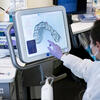
The Temple University Maurice H. Kornberg School of Dentistry is ranked 24th among 49 schools that received NIH funding for fiscal year 2024.
Photo by Ryan S. Brandenberg
For the first time in its history, the Kornberg School of Dentistry has been ranked among U.S. dental institutions that received competitive research funding from the National Institute of Dental and Craniofacial Research (NIDCR), a division of the National Institutes of Health (NIH) and a leading government agency for scientific research on dental, oral and craniofacial health and disease.
Kornberg is ranked No. 24 out of 49 dental schools that were granted funding from the NIDCR during fiscal year 2024.
“These external rankings are important validations of the good work that the School of Dentistry is doing,” said Josh Gladden, vice president for research. “The NIH is our primary funding source for research and scholarly work, so to have our primary sponsor validate one of our programs in this way is good for Temple.”
“Ranking No. 24 for the dental school is a major achievement for us. We succeeded in reaching this level with our resources compared to other largely funded universities,” said Amid Ismail, dean of the Kornberg School.
“The primary purpose of the dental school is to graduate dentists who can practice and provide care to the public. We are going to continue to focus on our mission and build a research program focused on oral health, dental health of patients, and how we improve and gain more knowledge,” he added.
The agency’s annual ranking is based on the amount of funding that dental schools receive during the federal fiscal year. Over the last several years, Kornberg moved from being unranked all the way to its current ranking of No. 24 based on its financial resources. Its overall rankings for the past five years can be seen below.
2020: $339,578 (No. 45)
2021: $626,256 (No. 38)
2022: $579,665 (No. 42)
2023: $1,443,554 (No. 34)
2024: $2,451,978 (No. 24)
Ismail credits the accomplishment to its efforts in building a successful research program. The Kornberg School invested in creating a Department of Oral Health Sciences and hired seven faculty members within the last 10 years to focus on areas of oral microbiome, smart biomaterials, artificial intelligence, community health and behavioral sciences.
Some of the department’s faculty members successfully applied for grants to address oral health improvements, which enabled Kornberg to evolve from not receiving NIH funding to becoming funded and moving into the ranking in 2024.
“This is a great achievement for the School of Dentistry, and I think it is going to produce some positive downstream effects,” Gladden said.
