
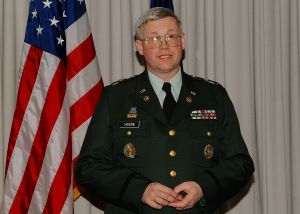
Please join us for a lecture by Jonathan House, Emeritus at US Army Command and General Staff College in Kansas and Gordon State College in Georgia.
War and Disorder Since 1989
The dissolution of the Soviet Union in 1991 left the United States as the sole remaining superpower, but a superpower that lacked a coherent strategy. Having reduced defense and intelligence spending in search of a “Peace Dividend,” Washington and its allies became over-extended in conflicts stretching from Haiti to Afghanistan. Misguided attempts to avoid prolonged conflicts actually backfired; the Bush administration deployed inadequate force to defeat its adversaries, creating the very situation it tried to prevent. Ultimately, this failure returned American security policy to its post-Viet Nam indecision, when reluctance to risk “boots on the ground” encouraged aggression.
Jonathan M. House received his history doctorate and his Army ROTC commission at the University of Michigan in 1975. House is professor emeritus of military history at the Army’s Command and General Staff College and a retired colonel of Military Intelligence. His military assignments included working on the joint staff in the Pentagon during both Iraqi conflicts. House is the author of multiple studies, including A Military History of the Cold War (2 vols.,) A Military History of the New World Disorder, 1989-2022 (2025,) and Intelligence and the State: Analysts and Decision Makers (2022). With David M. Glantz, he co-authored When Titans Clashed: How the Red Army Stopped Hitler (Revd. Ed. 2015) and the one volume summary of Stalingrad (2017).
This event is in-person and also available via Zoom. Please use this link to register.