
Narrative Strategies in Films by Akira Kurosawa, Sergio Leone, and Spike Lee
Yayoi U. Everett (CUNY Hunter College and the Graduate Center)
What do filmmakers, Akira Kurosawa from Japan, Sergio Leone from Italy, and Spike Lee from Brooklyn, New York, have in common? The proposed talk compares Kurosawa’sYōjimbō (1961), which partly inspired Leone’s Fist Full of Dollars (1964/67), and Kurosawa’s High to Low (1963), which inspired Spike Lee’s Highest 2 Lowest (2025). Kurosawa has always asserted that “the Western and the Japanese live side by side in my mind naturally, without the least sense of conflict.” Then, to what extent can Kurosawa’s influences be traced in Leone’s and Lee’s films—moving beyond the surface differences in setting, language, and character representation to the synergistic interplay between sight and sound?
To shed light on this question, I will engage with two methods for analyzing the role of music in these films. First, I will draw on Fumio Hayasaka’s and Kurosawa’s idea of kontrapunkt (“sonic counterpoint”)—that “film and visual should work as a contrapuntal synergy, giving rise to a third somatic energy” (Akiyama 1974). Masaru Sato’s non-conventional orchestration that integrates Japanese folk elements with blues and jazz in Yōjimbō finds its counterpart in Enrico Morricone’s distinctive use of male vocals, electric guitar, and whistling sounds in Fist Full of Dollars. Counterpointing may also include sudden ruptures or misaligned use of musical cues. Second, cinematic troping involves the expressive juxtapositions between sound and visual that shape narrative meaning at a higher level (Neumeyer 2015). Through the latter lens, the paper will demonstrate how Kurosawa’s film focuses on societal alienation of the kidnapper at the collective level, while Lee’s on the personal redemption of the record industry mogul, David King. In conclusion, I will explore intersections with other frameworks for analyzing film music offered by Juan Chattah, Sean Atkinson, Stephen McAdams et al, among others.
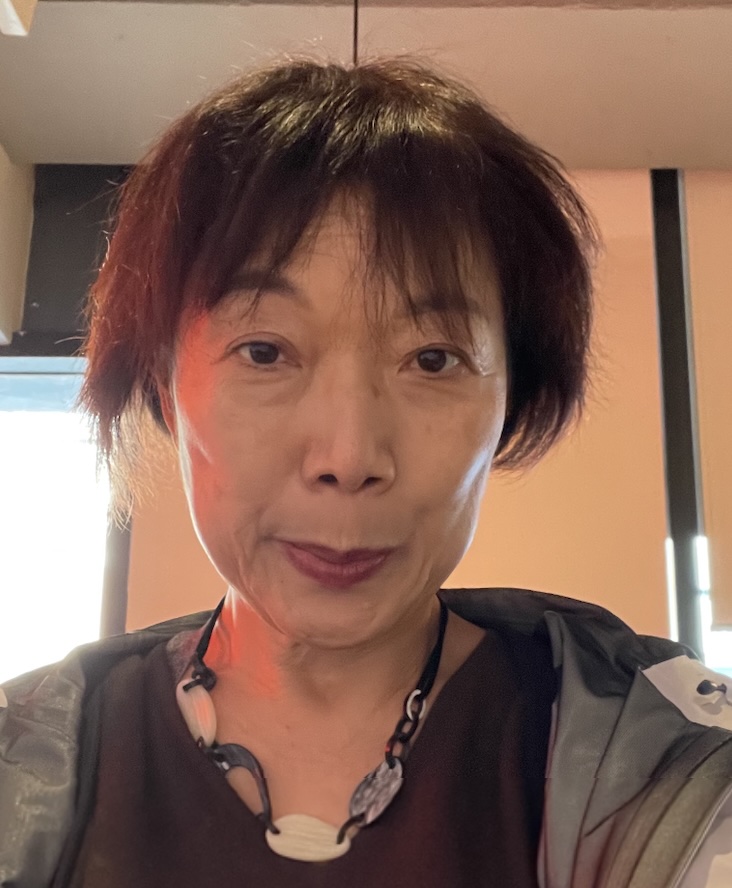
Yayoi Uno Everett is Professor of Music at CUNY Hunter College and the Graduate Center. Her research focuses on the analysis of postwar art music, film, and opera from the perspectives of semiotics, narratology, multimedia theories, cultural studies, and East Asian aesthetics. Her publications include monographs entitled Reconfiguring Myth and Narrative in Contemporary Operas (Indiana University Press, 2015) and The Music of Louis Andriessen (Cambridge University Press, 2006), a co-edited volume Locating East Asia in Western Music, and various peer-reviewed articles on music by Kaija Saariaho, John Adams, Thomas Adeès, Charles Wuorinen, Louis Andriessen, György Ligeti, Elliott Carter, Toru Takemitsu, Toshi Ichiyanagi, Chou-Wen Chung, Lei Liang, and Unsuk Chin.
This event is free and open to the public.